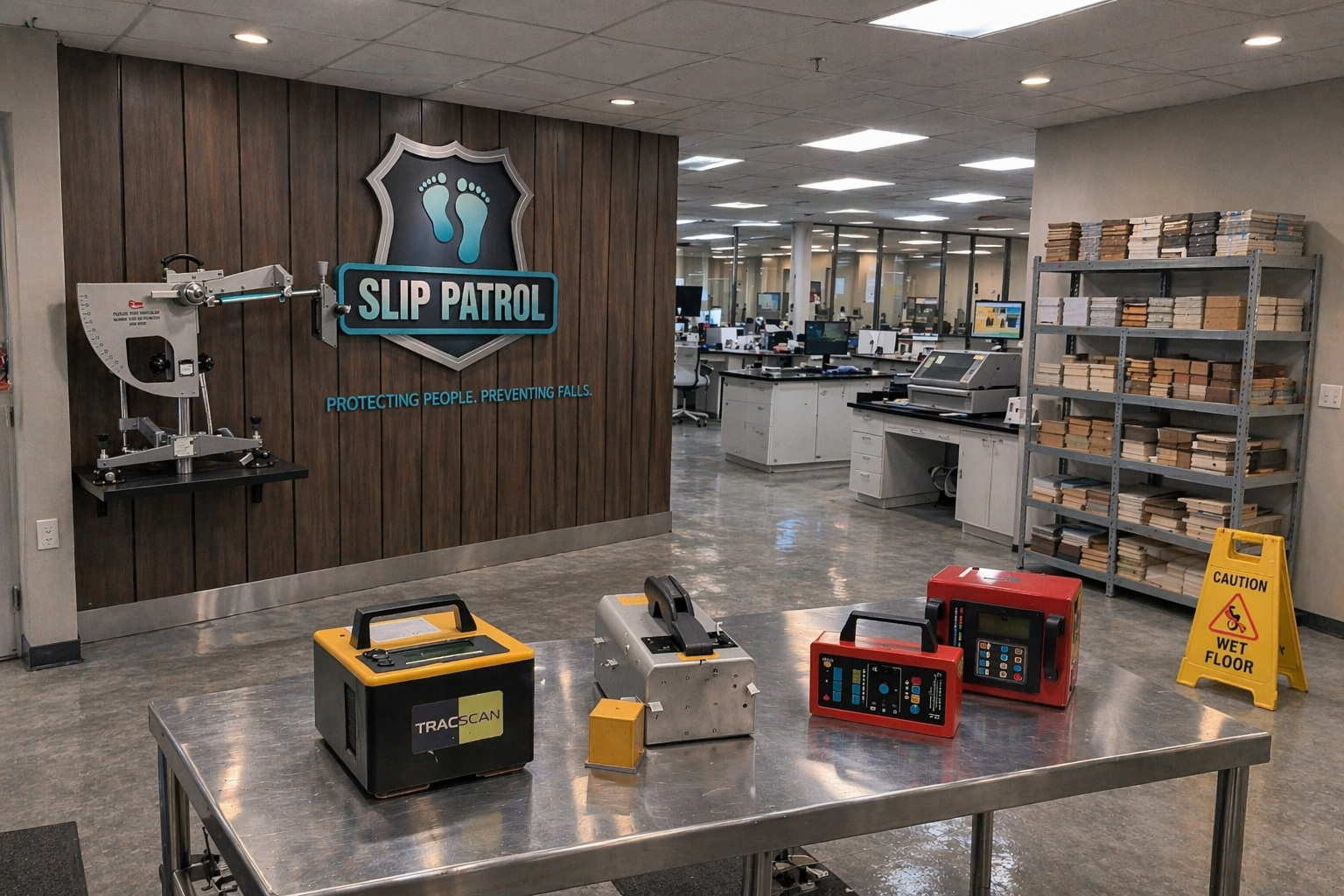
Slip Testing & Walkway Auditing Services | Slip Patrol
Professional Slip Testing & Walkway Auditing
Slip Patrol is a leading provider of slip testing and walkway auditing services across the United States, helping businesses reduce liability and improve floor safety through scientific, standards-based testing.
Our certified specialists (WACH) use National Floor Safety Institute (NFSI)–approved tribometers to measure the coefficient of friction (COF), including both Static Coefficient of Friction (SCOF) and Dynamic Coefficient of Friction (DCOF). These measurements determine how slippery a surface is under real-world conditions.
We perform testing and audits in accordance with industry-recognized standards:
NFSI B101.01 – Wet SCOF testing
NFSI B101.3 – DCOF testing
NFSI B101.4 – Walkway traction testing
NFSI B100.0 – Walkway safety audits
ANSI A326.3 - DCOF measurement/quality control
As NFSI-Certified Walkway Auditors, we provide detailed reports and defensible data that support risk management, compliance, and litigation cases.
Slip Testing
Forensic Floor Testing & Expert Support
In a slip-and-fall case, outcomes often hinge on one question:
Did the walking surface provide adequate slip resistance at the time of the incident?
Warning signs, cleaning logs, and footwear are not definitive proof.
Objective testing is.
Slip Patrol provides forensic slip resistance testing using NFSI-approved tribometers, delivering measurable, defensible data for litigation.
Forensic Slip Testing for Litigation
We support plaintiff and defense attorneys with independent, third-party floor testing and reporting designed for use in claims, negotiations, and court proceedings.
Our process focuses on:
Objective measurement of walkway traction
Real-world surface conditions
Industry-recognized testing methodologies
Clear, defensible documentation
What We Provide
On-site slip resistance testing
NFSI-based multi-method tribometer testing
Forensic evaluation of walking surfaces
Date- and condition-specific testing
Photo and environmental documentation
Detailed written reports suitable for litigation
Expert support for case review and interpretation
Built for Legal Defensibility
Slip Patrol reports are designed to help answer critical case questions:
Was the floor reasonably safe?
Did the surface present a slip hazard?
Was there a measurable loss of traction?
Were conditions consistent with a slip event?
Our documentation helps establish evidence-based conclusions, not assumptions.
Request Slip Testing for Your Case
If you are evaluating a slip-and-fall claim or need forensic floor testing, we can help.
Contact Slip Patrol today to schedule testing or discuss your case.
Slip Patrol’s floor safety program implementation follows the framework of NFSI B101.8 by creating an integrated, documented process for slip testing, floor safety inspections, hazard identification, staff training, incident reporting, corrective action, and continuous program review. Our slip testing program is designed to help commercial businesses, healthcare facilities, hospitality groups, restaurants, retail environments, and other operational facilities reduce slip-and-fall risk by evaluating walking surfaces, reviewing floor care and maintenance practices, identifying conditions that contribute to slips, trips, and falls, and maintaining defensible records that demonstrate a proactive approach to walkway safety. Slip Patrol provides professional slip testing services, floor safety assessments, and ongoing floor safety program support for commercial businesses that want stronger risk management, better documentation, and safer walking surfaces.
Slip Testing & Walkway Safety
FAQ: Slip Testing & Walkway Safety
What is slip testing?
Slip testing is the process of measuring how much traction a walking surface provides under specific conditions. It uses specialized equipment (tribometers) to evaluate whether a floor is likely to cause slips or falls. This testing provides objective data used by commercial property owners, proprietors, risk managers, and attorneys.
What is the coefficient of friction (COF)?
The coefficient of friction (COF) is a measurement used to evaluate how slippery or slip-resistant a surface is. Higher COF values generally indicate more traction, while lower values indicate a higher risk of slipping.
What is the difference between SCOF and DCOF?
Static Coefficient of Friction (SCOF): measures the force required to start movement between a shoe and floor
Dynamic Coefficient of Friction (DCOF): measures traction while a person is already in motion
Both measurements are important for understanding real-world slip risk.
How is slip testing performed?
Slip testing is performed on-site using NFSI-approved tribometers. The surface is tested under controlled conditions to measure traction. Results are documented and provided in a detailed report that can be used for safety programs or legal cases.
Why is slip testing important?
Slip testing helps determine whether a floor is reasonably safe. It provides measurable data that can:
Reduce liability risk
Support insurance and compliance efforts
Strengthen or evaluate slip-and-fall claims
Improve overall walkway safety
Can slip testing be used in legal cases?
Yes. Forensic slip testing is often used in slip-and-fall cases to evaluate whether a surface contributed to an incident. Proper documentation and testing methods can provide objective evidence for attorneys and insurance carriers.
What types of surfaces can be tested?
Slip testing can be performed on a wide range of surfaces, including:
Tile (ceramic, porcelain)
Concrete and coatings
Vinyl and LVT
Stone surfaces
Pool decks and splash pads
How often should floors be tested?
Testing frequency depends on traffic, environment, and risk level. High-traffic commercial environments, healthcare facilities, and hospitality properties benefit from regular walkway safety evaluations.
What does a slip resistance test report include?
A professional report typically includes:
Test results and measurements
Site conditions at time of testing
Photo documentation
Surface observations
Recommendations for improving traction

Tribometers for rent $700/Week
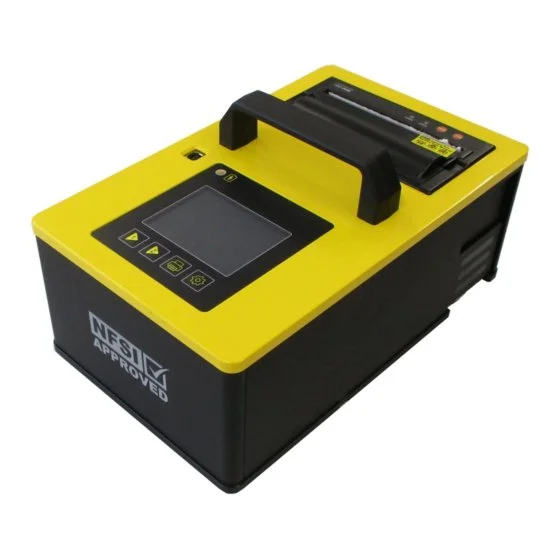
TRACSCAN 2.0
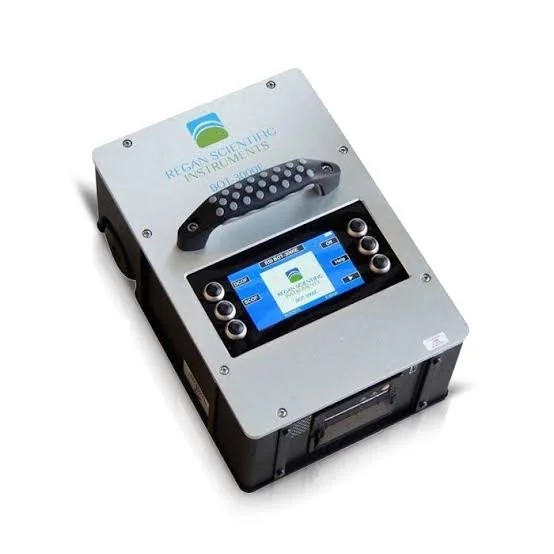
BOT 3000E
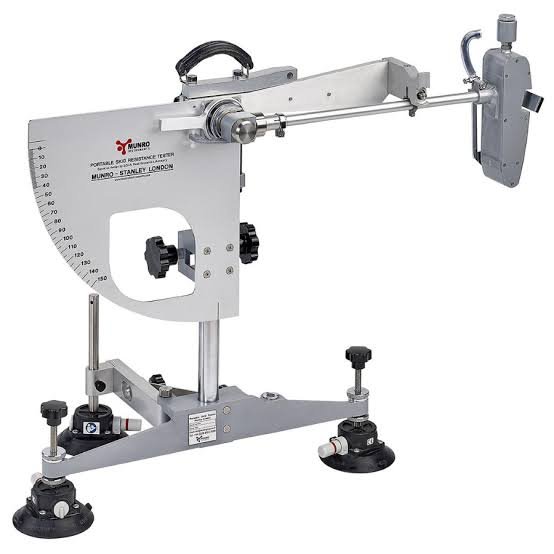
BRITISH PENDULUM